Why I Choose Honey Over Sugar

September is National Honey Month and this year I thought it would be fun to highlight honey as a delicious and healing medicine.
In my personal journey with honey, I went from seeing it as just as simply eating something sweet to understanding honey as food, tradition, and healing from the hive.
For most of my life, I thought of honey as a sweetener. Something you put in tea. Something you drizzled on toast. Something you reached for when you had a sore throat.
It wasn't until I became deeply involved with bees and began truly learning about the products of the hive that I started to understand honey differently.
I came to honey looking for healing. And the more I learned, the more I began questioning something most of us have been taught to accept without much thought: Why are we consuming so much refined sugar when nature gives us honey?
That question changed the way I looked at sweetness.

Sugar and Honey Are Both Sweeteners, But They Aren't the Same Food
I think this is an important place to begin because I never want to make honey into something it isn't.
Honey contains 'sugars'. It contains primarily fructose and glucose, and it still affects blood sugar. Honey isn't something we should consume without limits simply because it comes from bees.
But honey is also much more than isolated sugar.
Real honey is a complex natural food created when bees collect nectar from flowers, transform it enzymatically, reduce its moisture content and store it within the hive.
Depending on its floral source and how it is handled, honey can contain plant compounds including polyphenols and flavonoids, along with organic acids, enzymes and other naturally occurring constituents.
Refined table sugar is primarily sucrose. It provides sweetness and energy, but very little else.
And that distinction matters to me.
When I sweeten something, I would rather reach for a food that still carries something of the plant, the flower and the hive with it.
The Problem Isn't One Teaspoon of Sugar
When we talk about sugar and inflammation, I think we have to be careful not to oversimplify it.
Eating a teaspoon of sugar doesn't suddenly “cause inflammation.”
The bigger concern is the amount of added sugar that has quietly made its way into the modern diet. It's in beverages, cereals, sauces, coffee drinks, snacks, yogurt, granola bars and foods we don't necessarily think of as desserts.

Research has associated diets high in added sugars, particularly sugar-sweetened beverages and highly processed foods, with metabolic changes and inflammatory processes that are connected with conditions such as obesity, insulin resistance and cardiovascular disease.
For me, that became another reason to reconsider how I used sweetness in my own kitchen. Not necessarily to eliminate every sweet thing. But to become much more intentional about it.
What Makes Honey Different?
One of the things I find most fascinating about honey is that there isn't really one honey.
Buckwheat honey is different from acacia honey.
Manuka is different from clover.
Greek thyme honey is different from sunflower honey.
Even honey harvested from two locations only a few miles apart can taste and behave differently because the nectar sources, soil, weather and growing conditions are different.
Honey has terroir.
And those botanical differences can influence its color, flavor, aroma and antioxidant composition.
Generally, darker honeys tend to contain higher concentrations of certain phenolic compounds and often demonstrate greater antioxidant activity, although every honey is unique.
That means the jar sitting on your kitchen counter represents an extraordinary chain of relationships:
soil → plant → flower → bee → hive → honey → us
Once I began seeing honey that way, it became very difficult for me to think of it as simply another form of sugar.
Honey Has a Long History of Healing
Long before we had laboratories to analyze honey, people were using it.
Across cultures and throughout history, honey has been used as both food and traditional medicine.
And today, some of those traditional uses have modern scientific support.
One of the clearest examples is wound care. Certain medical-grade honeys are used clinically in wound management because honey can help create an environment that inhibits microbial growth and supports healing.
Honey also has evidence supporting its use for soothing coughs.
Researchers continue to study honey's antioxidant, antimicrobial and anti-inflammatory properties and how its botanical compounds interact with human health.
Our ancestors weren't foolish for recognizing that honey was something unusual.
Modern science is beginning to explain some of what people have observed for generations.
Honey Changed the Way I Think About Food
Working with bees has taught me to look at food differently.
A bee doesn't manufacture honey in a factory.
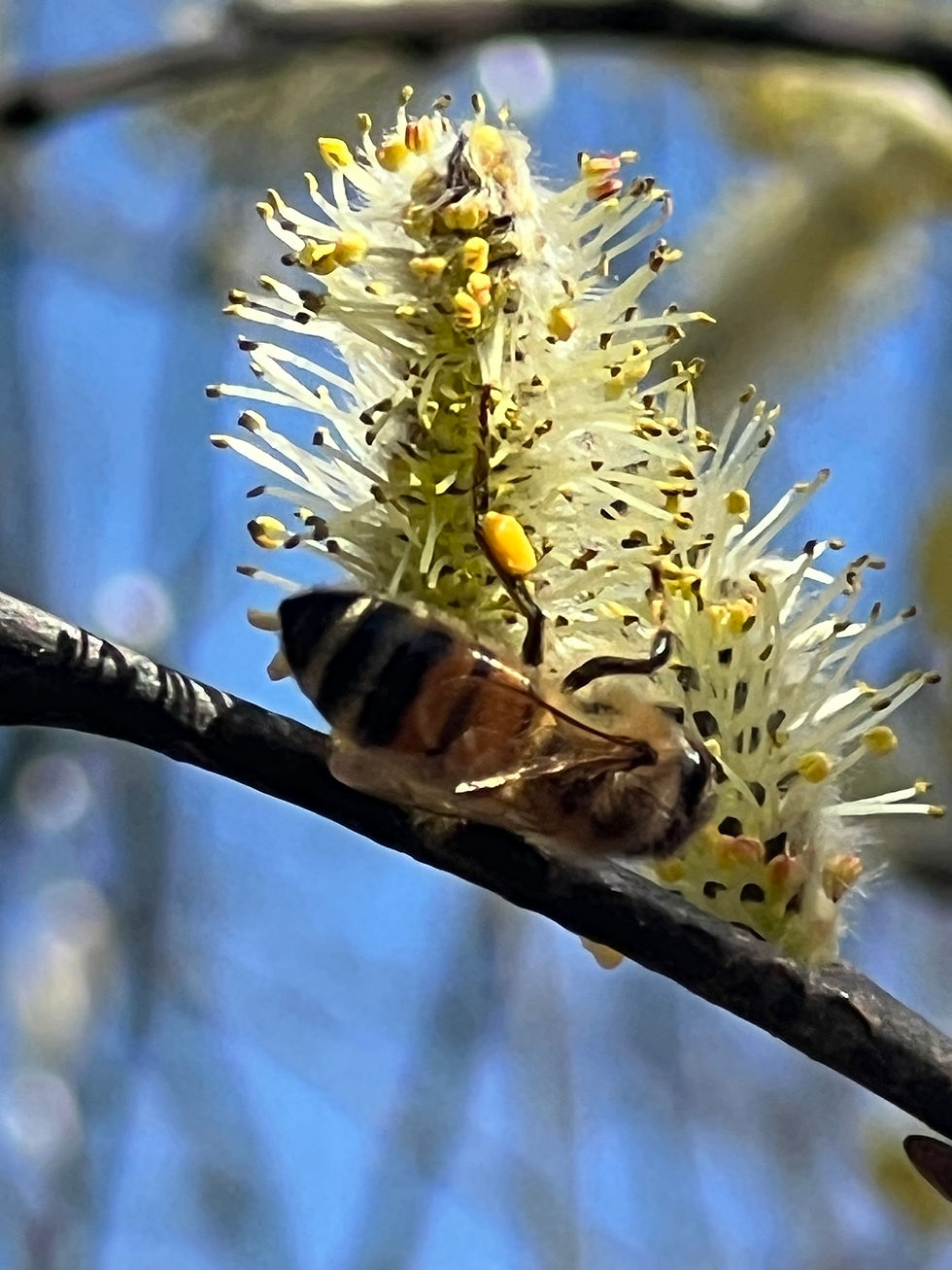
Honey begins in a landscape.
It begins with rainfall and sunshine. Soil and roots. Trees, herbs, wildflowers and crops. Then thousands of individual flights between flowers and the colony.
When I hold a jar of honey now, I see all of that.
And I think that's part of what “healing from the hive” has come to mean for me.
Healing isn't always about finding one miraculous substance that fixes everything.
Sometimes it is about changing our relationship with the everyday choices we make.
Instead of automatically pouring refined sugar into something, I can ask:
Could I use honey here instead?
Honey in salad dressing.
Honey in marinades.
Honey stirred into tea.
Honey in homemade granola.
Honey with nut butter.
Honey in sauces.
Honey in baked goods.
Honey drizzled over fruit or yogurt.
Those little swaps add up.
But Honey Still Deserves Respect
I love honey enough to tell the truth about it.
Honey is not a free food.
It contains calories and naturally occurring sugars, and portion still matters, particularly for anyone who needs to closely manage blood glucose.
The goal isn't to replace a cup of sugar with a cup of honey and suddenly call the recipe healthy.
The goal is something much more interesting:
Use less sweetness, choose it intentionally and make the sweetness you do use count.
Honey is sweeter than table sugar, so in many recipes you may find that you can use less of it. And because different honeys bring their own flavors, sweetness becomes an ingredient rather than simply a sensation.
A spoonful of buckwheat honey tastes completely different from a spoonful of acacia.
That encourages us to slow down and actually taste our food. When your body is craving sweets, it's not inherently bad, it is telling you it needs honey or fruit. Using some simple swaps we can still enjoy the sweet things in life without the impact refined sugar has on the body.

Coming Back to the Hive
My journey with honey started with bees, but it has become about much more than beekeeping.
It has made me curious about plants, food, traditional preparations, herbalism, agriculture and the extraordinary relationships that exist between our health and the natural world.
I don't believe we need to fear sugar.
I believe we need to understand it.
And when I have the choice between a highly refined sweetener and real honey, I know which one I want in my kitchen.
Not because honey magically makes every food healthy.
But because honey gives me something refined sugar cannot.
It gives me flavor.
It gives me plant compounds.
It gives me a connection to the season and landscape where it was produced.
It gives me thousands of years of food tradition.
And perhaps most importantly, it reminds me that sweetness doesn't have to begin in a factory.
Sometimes it begins with a flower.
And a bee.


Comments